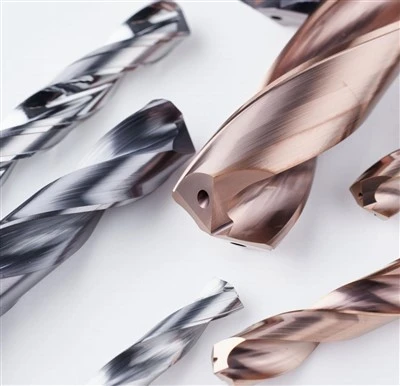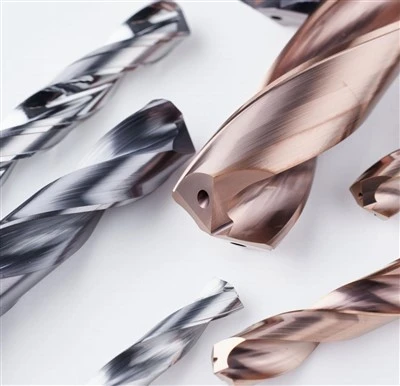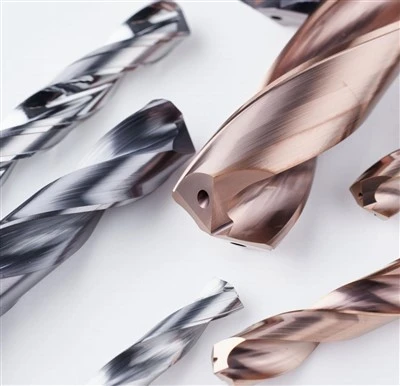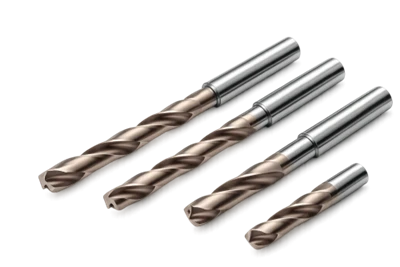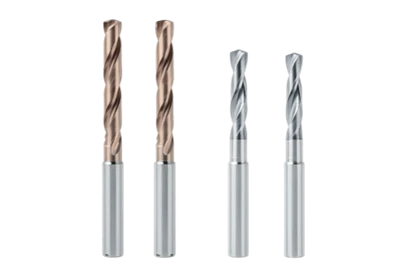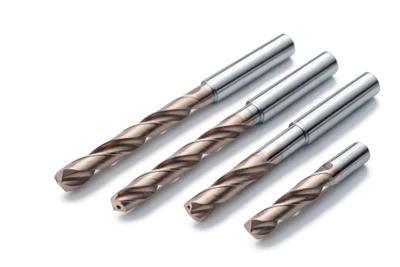
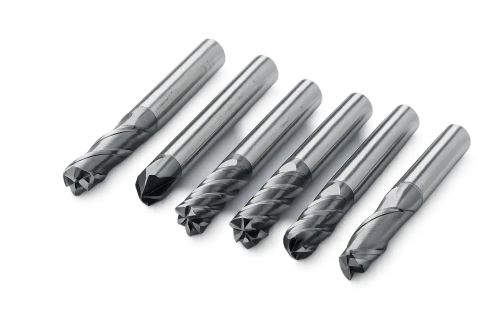
Product Benefits
High Rigidity, High Precision
The integral structure features no gaps between the cutting edges and the tool body; radial runout is controlled within 0.005 mm. This makes it particularly well-suited for high-speed, high-precision contouring and the milling of miniature parts.
01
Flexible and Economical Regrinding
Even when the tool becomes worn, the helical flutes and end teeth can be reground multiple times using professional tool grinders, thereby extending the tool's service life. Consequently, the overall cost per workpiece is lower than that of indexable tools.
02
Diverse Flute Designs
Available in configurations ranging from 2, 3, or 4 flutes up to as many as 6 to 8 flutes, adapting to complex machining scenarios such as roughing, finishing, ramp milling, plunge milling, and trochoidal milling. The design features unequal helix angles and variable pitch spacing to effectively suppress chatter.
03
Superior Surface Finish
The cutting edges of these solid end mills can be controlled to a sharpness of Rz ≤ 0.2 μm; when combined with a micro-fine coating, they achieve a mirror-like finish of Ra ≤ 0.4 μm when machining materials such as aluminum alloys and mold steels.
04
Ideal for Micro-Diameters and Deep Cavities
With minimum diameters reaching as small as 0.1 mm and length-to-diameter ratios extending up to 10–20 times, these tools are utilized in microelectronics, medical device manufacturing, and the machining of deep ribs in molds-applications that are extremely difficult to achieve using indexable tooling.
05
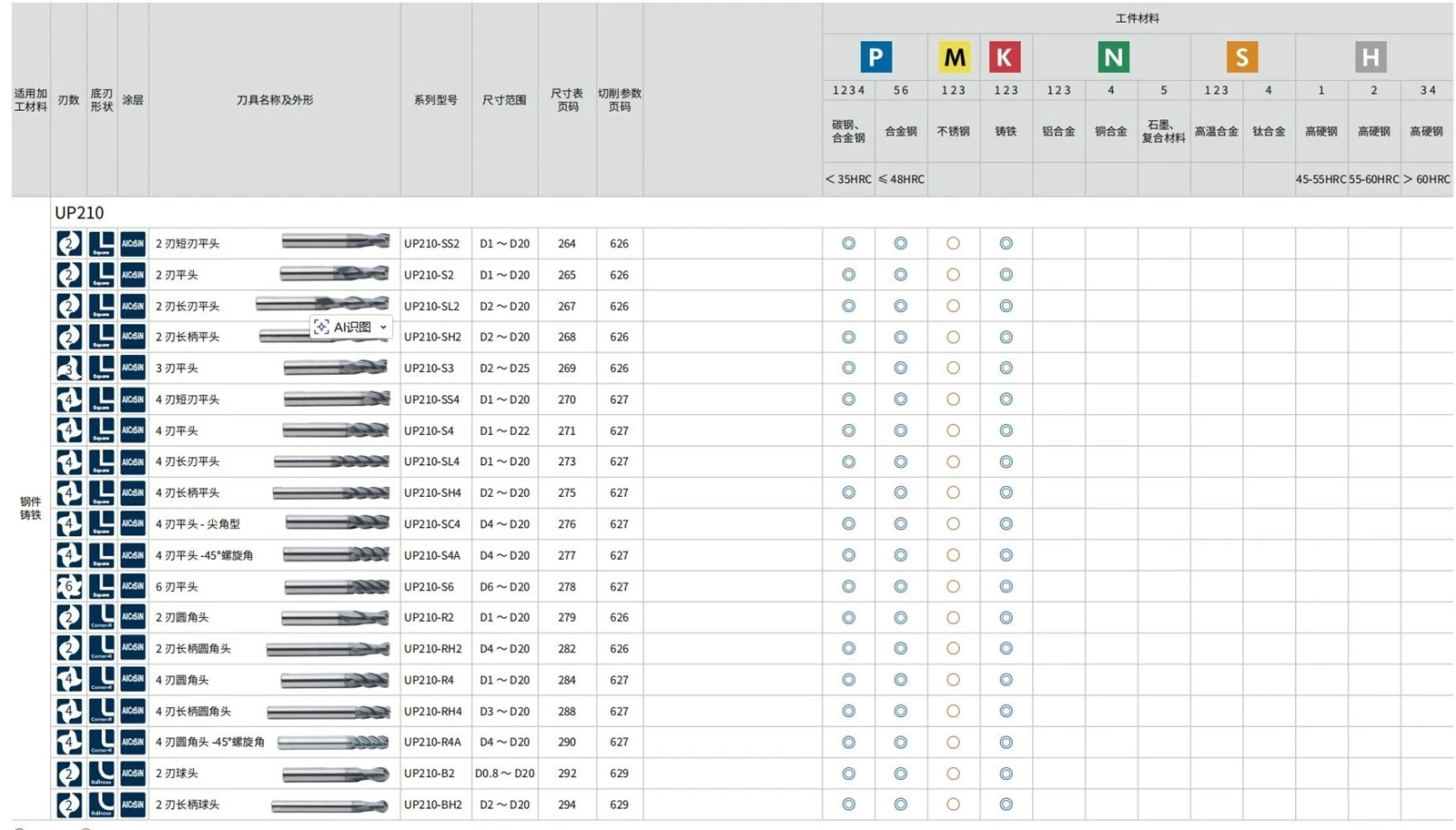
Manufacturing Process
Rod Preparation: Sub-micron or ultra-fine-grained tungsten carbide powder (grain size: 0.2–0.8 μm) is mixed with a cobalt binder. The mixture is then formed via precision molding or extrusion, followed by high-temperature, low-pressure sintering (1400–1500°C) to produce high-density, high-hardness cemented carbide rods with a hardness rating reaching HRA 92–94.
5-Axis Grinding: Utilizing a 5-axis CNC tool grinder equipped with diamond grinding wheels, the spiral flutes, primary relief angle, secondary relief angle, end-tooth clearance, and core are ground in sequence. Key parameters include core taper, flute polishing for chip evacuation, and cutting-edge rounding (radius: 0.003–0.03 mm). Adequate cooling is essential during the grinding process to prevent thermal damage (burning).
Cutting Edge Treatment: Edge passivation is performed via brushing or sandblasting to remove microscopic burrs and homogenize the edge radius, thereby enhancing resistance to chipping.
Coating: Applied using PVD (typically AlCrN, TiAlSiN, or TiSiN) or CVD (less commonly used for small diameters) processes, with a coating thickness ranging from 1 to 4 μm. High-aluminum coatings are utilized for stainless steel and titanium alloys to enhance hot hardness; for aluminum alloys, Amorphous Diamond-Like Carbon (DLC) coatings are applied to prevent built-up edge formation.
Inspection and Marking: Laser marking is used to indicate the diameter, material grade, and coating specifications. Additionally, a tool measuring instrument is employed to verify cutting diameter tolerances (±0.005 mm), runout, helix angle, and other critical parameters.
Hot Tags: solid end mill, China solid end mill manufacturers, suppliers, factory