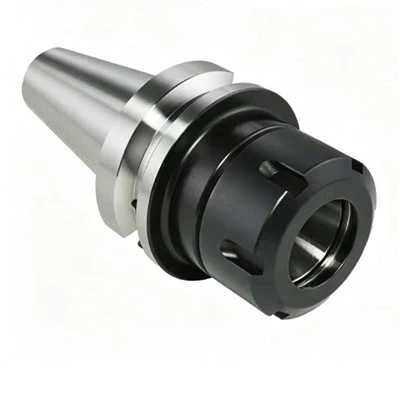
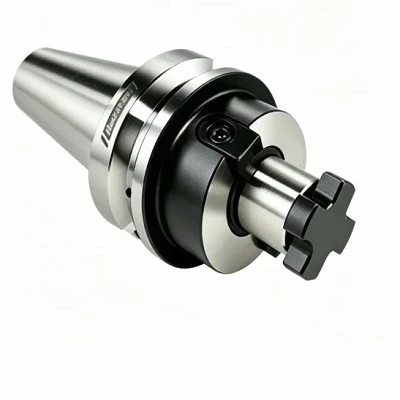
Short ER Collet Chucks are designed to hold cylindrical-shank cutting tools in CNC machining applications where compact holder dimensions and spindle clearance are important. The holder uses a compatible ER collet and clamping nut to grip the tool shank. Selection depends on the spindle interface, tool diameter, gauge length, body clearance, and operating speed. Available configurations should be matched to machine requirements and approved engineering drawings.
Key Advantages
Compact Tool Setup
A short holder body helps reduce tool projection from the spindle interface. This configuration is useful for machining near fixtures, inside pockets, and in areas with limited tool access.
Flexible Tool Clamping
Multiple ER series support different cylindrical tool shank diameters. The correct collet must match the tool diameter and remain within its specified clamping range.
Spindle Interface Options
Holder configurations can be selected according to the machine connection, taper dimensions, flange geometry, and retention requirements. Interface details should be confirmed before ordering.
Custom Dimensions
Overall length, body diameter, and nose geometry can be specified for custom production. Dimensioned drawings help establish the required fit, clearance, and manufacturing tolerances.
Technical Specifications
|
Parameter |
Specification |
|
Product Type |
Short ER Collet Chuck |
|
Available ER Series |
ER11, ER16, ER20, ER25, ER32, ER40 |
|
ER11 Reference Clamping Range |
0.5–7.0 mm |
|
ER16 Reference Clamping Range |
1.0–10.0 mm |
|
ER20 Reference Clamping Range |
1.0–13.0 mm |
|
ER25 Reference Clamping Range |
1.0–16.0 mm |
|
ER32 Reference Clamping Range |
2.0–20.0 mm |
|
ER40 Reference Clamping Range |
3.0–26.0 mm |
|
Tool Shank Sizes |
Metric and inch options |
|
Material |
Alloy steel |
|
Hardness |
HRC 58–62 |
|
Runout |
≤0.005 mm |
|
Maximum Operating Speed |
15,000 rpm |
How to Select the Right Configuration
Spindle Interface
Confirm the machine-side connection, taper dimensions, flange geometry, and retention system. The holder must match the specified spindle interface rather than external dimensions alone.
Tool Shank Diameter
Measure the cutting tool shank and select a compatible ER collet. Check the manufacturer's specified clamping range and ensure correct assembly of the collet and nut.
Gauge Length and Clearance
Specify the required gauge length, overall length, and maximum body diameter. Check the holder against fixture positions, workpiece geometry, and the intended tool path.
Accuracy and Speed
Define the required total indicated runout (TIR), measurement position, and maximum spindle speed. Balancing requirements should be specified according to the intended rotational speed and holder configuration.
Typical Applications
CNC Milling
Suitable for compatible cylindrical-shank end mills and other milling tools within the selected collet's range. Tool diameter, overhang, cutting load, and holder clearance should be considered during setup.
Drilling and Reaming
Holds compatible drills and reamers when their shank dimensions match the selected collet. Correct alignment and tool assembly support consistent machining setups.
Restricted-Clearance Machining
A compact holder can provide additional clearance for pocket machining and operations near workholding fixtures. Overall length and nose diameter should be checked against the machining area.
Repeat Production
Defined holder dimensions and consistent assembly procedures support repeatable tool setups. Actual machining accuracy also depends on the machine, cutting tool, workholding, and process conditions.
Custom Manufacturing
Length and Geometry
Specify overall length, body diameter, nose dimensions, and other critical features according to the required machining setup.
Spindle Interface
Provide taper, flange, and retention dimensions for custom or replacement configurations. Interface compatibility should be reviewed before production.
Drawing-Based Production
Engineering drawings should identify dimensional tolerances, material grade, surface finish, and applicable inspection requirements.
Technical Review
Custom designs are reviewed for dimensional feasibility, tool clearance, interface compatibility, and intended operating conditions before manufacturing.
Quality Control
Dimensional Inspection
Critical dimensions, including taper geometry, interface features, gauge length, and specified diameters, should be checked against approved drawings.
Runout Inspection
Total indicated runout should be measured at the specified position and compared with the agreed acceptance limit.
Material Verification
Material grade, heat-treatment requirements, and hardness limits should follow the applicable product specification and inspection requirements.
Batch Inspection
Consistent drawings, inspection criteria, and product specifications help maintain dimensional consistency across production lots. Inspection records can be provided according to agreed requirements.
Information Required for Quotation
Product Configuration
Specify the ER series, spindle interface, tool shank diameter, and required gauge length.
Technical Requirements
Provide overall length, body diameter, runout tolerance, maximum operating speed, and balancing requirements where applicable.
Drawings and Quantity
Attach dimensioned drawings or reference sketches and state the required order quantity. Include expected repeat-order demand when available.
Replacement Requirements
For replacement holders, provide existing dimensions, spindle interface details, and the required tool clearance to help establish the correct configuration.
Frequently Asked Questions
Q: What is a Short ER Collet Chuck used for?
A: It holds compatible cylindrical-shank cutting tools in CNC machining setups where compact dimensions and spindle clearance are important.
Q: How do I choose the correct ER series?
A: Match the tool shank diameter to a compatible collet and verify its specified clamping range.
Q: Can the holder length and spindle interface be customized?
A: Custom dimensions and interface configurations can be reviewed according to engineering drawings and manufacturing requirements.
Q: What information is needed for a quotation?
A: Provide the ER series, spindle interface, tool diameter, gauge length, required tolerances, drawings, and order quantity.
Q: How can I confirm machine compatibility?
A: Provide the spindle interface specifications, required holder dimensions, cutting tool details, and maximum operating speed for configuration review.
Hot Tags: short er collet chucks, China short er collet chucks manufacturers, suppliers, factory, Boring Bar Tool Holder, CNC Screw in Milling Cutter Holder, ER Spring Collet Tool Holder BT, Face Mill Arbor Holder Inch, internal turning tool holder, NT ER Collet Chuck Set