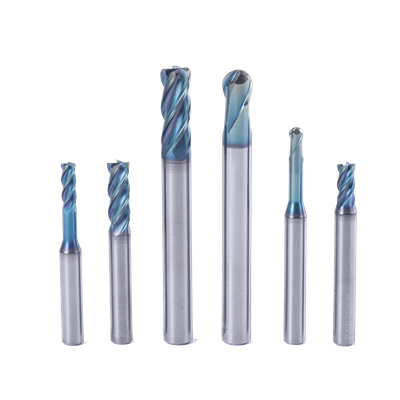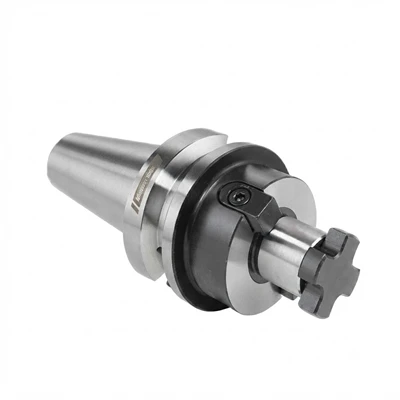

Extended-Length ER Collet Chucks provide additional tool reach for CNC machining operations involving deep cavities, recessed surfaces, narrow slots, and restricted access areas. The ER clamping system holds compatible cylindrical-shank cutting tools through a matching collet and nut. Selection depends on the machine interface, ER series, tool diameter, projection length, nose clearance, and runout requirements. Standard configurations and custom dimensions can be evaluated against machining requirements and technical drawings.
Key Advantages
Extended Tool Reach
Additional projection helps reach recessed machining features while maintaining clearance from surrounding workpiece surfaces and fixtures.
Flexible Tool Clamping
Compatible ER collets accommodate specified cylindrical tool shank diameters for milling, drilling, and finishing operations.
Application-Specific Dimensions
Projection length, nose profile, and mounting interface can be selected according to workpiece geometry and the required cutting position.
Technical Specifications
|
Parameter |
Specification |
|
Product Type |
Extended-Length ER Collet Chuck |
|
ER Series |
ER16, ER20, ER25, ER32, ER40 |
|
Projection Length |
100–200 mm |
|
Overall Length |
150–250 mm |
|
Machine Interface |
BT30, BT40, HSK-A63 |
|
Nose Diameter |
25–50 mm |
|
Runout Accuracy |
≤0.01 mm |
|
Material |
Alloy Steel |
|
Hardness |
HRC 56–60 |
|
Balancing Grade |
G2.5 |
Applications
Deep Cavity Machining
Provides additional reach for recessed surfaces and deep pockets in mold components, dies, and precision parts.
Narrow Slots and Recessed Features
A suitable nose diameter helps establish clearance when machining narrow passages or features surrounded by higher surfaces.
Mold and Die Manufacturing
Supports milling and finishing operations where cavity depth and workpiece geometry restrict tool access.
Precision Component Production
Suitable configurations can be evaluated for drilling, milling, and finishing operations involving hard-to-reach features.
ER Series and Size Selection
Match the ER Series
Select the ER series according to the tool shank diameter and the specified clamping range of the compatible collet.
Confirm Tool Diameter
Provide the actual shank diameter and verify that the selected collet supports it within its permitted range.
Determine Required Length
Specify projection length and overall length separately. Include the measurement reference and required cutting position.
Check Nose Clearance
Compare the holder nose diameter with the narrowest opening along the intended tool path to confirm access.
Machine Interface and Compatibility
Spindle Interface
Specify the exact machine-side interface and applicable standard. Mounting geometry must match the intended spindle connection.
Assembly Dimensions
Confirm gauge length, contact geometry, retention arrangement, and coolant passage requirements where applicable.
Accessory Compatibility
Match the ER collet, nut, and cutting-tool shank to the holder specification. State any through-coolant requirement separately.
Precision and Machining Considerations
Runout Requirements
Define the permitted total indicated runout, measurement position, test mandrel, and assembly conditions. These details establish a consistent inspection basis.
Tool Projection and Rigidity
Use the shortest projection that provides the required access. Greater projection can increase deflection and vibration sensitivity depending on tool diameter, cutting forces, and machining conditions.
Operating Speed
Specify the intended maximum spindle speed and balancing requirement. Confirm suitability for the complete assembled configuration.
Customization Options
Length and Nose Profile
Specify projection length, overall length, nose diameter, and required clearance on the technical drawing.
Mounting Interface
Provide the required interface designation, critical dimensions, and applicable standard for compatibility review.
Precision Requirements
State runout tolerance, measurement position, operating speed, and balancing grade where required.
Drawing-Based Development
Custom configurations can be evaluated against technical drawings, machining conditions, and manufacturing feasibility before confirmation.
Quality and Order Confirmation
Dimensional Verification
Identify critical dimensions, tolerances, and inspection requirements on the approved drawing.
Inspection Documentation
Define required dimensional inspection records, runout results, material documentation, and balancing records according to the application.
Order Specification
Record the ER series, machine interface, projection length, overall length, nose diameter, tool shank diameter, quantity, and approved drawing revision for repeat orders.
Frequently Asked Questions
Q: What is an extended-length ER collet chuck used for?
A: It provides additional tool reach for deep cavities, recessed surfaces, narrow slots, and other features with restricted machining access.
Q: How do I choose the correct ER series?
A: Match the series to the tool shank diameter, compatible collet range, clamping requirements, and machining application.
Q: Can the projection length be customized?
A: Custom lengths can be evaluated against technical drawings, clearance requirements, mounting dimensions, and machining conditions.
Q: How should runout accuracy be specified?
A: State the permitted runout, measurement position, test mandrel, and assembly conditions. Confirm the acceptance criteria before ordering.
Q: What information is needed for a quotation?
A: Provide the machine interface, ER series, tool shank diameter, required lengths, nose clearance, runout requirement, operating speed, quantity, and technical drawing if available.
Hot Tags: extended-length er collet chucks, China extended-length er collet chucks manufacturers, suppliers, factory, ER Spring Collet Tool Holder BT, insert tool holder, NT ER Collet Chuck CNC, Precision NT ER Collet Chuck, Screw in Milling Cutter Holders, tapping tool holder