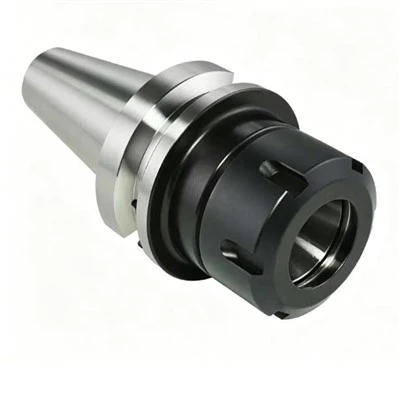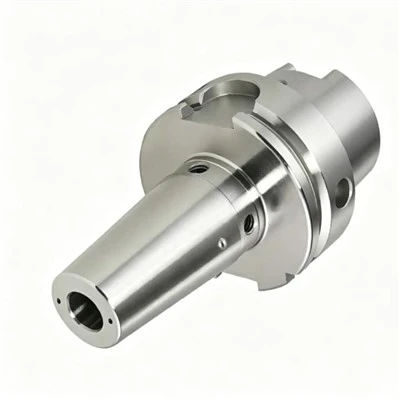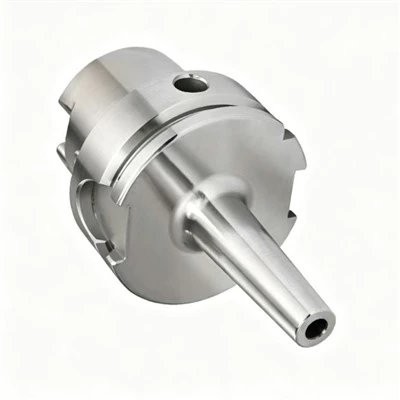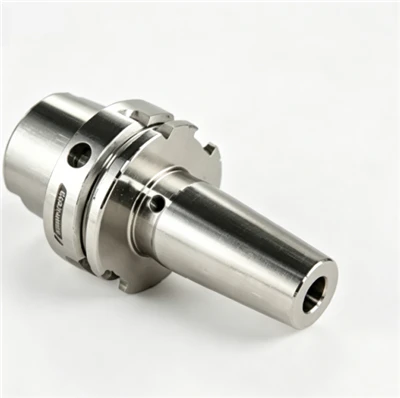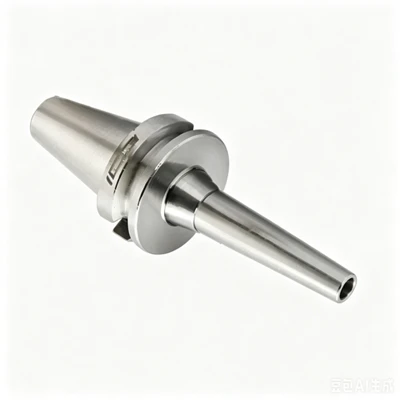
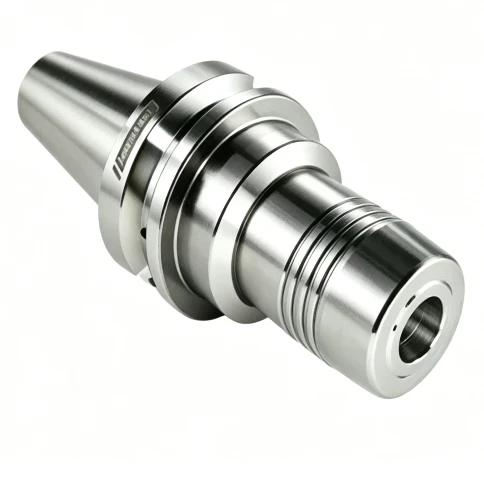
Key Features
Clamping Principle
A single hex wrench is used to tighten a pressure screw; the internal hydraulic fluid expands a diaphragm, creating a uniform, 360-degree grip that securely locks the tool holder. Featuring a purely mechanical structure, it is user-friendly and completely eliminates human error.
Extreme Precision
Runout is typically within 0.003 mm; high-end models can maintain runout below 1 μm at a projection length of 4 times the diameter, with a repeatability accuracy of 1 μm. The direct benefits are superior surface finish and extended tool life.
Superior Vibration Damping
The internal hydraulic fluid acts as a built-in shock absorber, effectively dampening cutting vibrations (chatter). This not only protects the spindle and cutting tool but also allows for significantly higher cutting parameters while maintaining the same surface roughness requirements.
Rapid Tool Change
No heat-shrink machines or specialized torque wrenches are required; a single hex wrench allows for on-the-spot tool changes within 30 seconds, without the need to remove the holder from the spindle. Models equipped with internal cooling capabilities can deliver coolant directly to the cutting edge, ensuring stable chip evacuation during deep-hole drilling and high-speed machining.
High RPM & Clearance
Factory standard models feature G2.5 dynamic balancing (high-performance models can withstand speeds up to 60,000 RPM). Additionally, the slim outer diameter of the holder's head provides significant clearance advantages for 5-axis machining and working within deep cavities in mold manufacturing.
Versatile Application
When paired with reduction sleeves, a single tool holder can clamp tools with shank diameters ranging from 3 mm to 32 mm. It also offers axial micro-adjustment capabilities with 0.01 mm precision (featuring a 10 mm travel range), resulting in substantial savings on tool inventory costs.


Hydraulic vs. Shrink-Fit Toolholders
Compared to Shrink-Fit Tool Holders
Hydraulic holders excel in the following areas: They eliminate the need for heating and cooling cycles, enabling rapid tool changes; their vibration-damping capabilities far surpass those of solid steel bodies; they offer exceptional tolerance latitude regarding the tool shank; and they do not damage the shank or induce micro-oxidation.
The sole advantage of shrink-fit holders lies in: Extreme rotational speeds. Beyond 35,000 RPM, centrifugal forces can cause the hydraulic fluid to migrate away from the clamping zone, resulting in a loss of pressure-a physical limitation that shrink-fit holders do not face.
Compared to ER Collets
Hydraulic Holders Excel In: Overwhelmingly superior precision. ER systems are cobbled together from a nut, collet, and tool body, offering absolutely no vibration damping; hydraulic holders, conversely, provide integral vibration absorption. Furthermore, clamping force does not rely on the operator's physical strength when tightening the nut, ensuring that-even during manual tool changes-there is no risk of insufficient clamping force or the tool dropping out.
The Collet's Sole Advantage: Affordability. Additionally, it offers a wide clamping range capable of accommodating various tool diameters without the need to purchase separate reduction sleeves.
Compared to Side-Lock Tool Holders
Hydraulic Technology: A Decisive Superiority. Side-lock holders rely on single-point force application via a set screw; this often causes the tool to be pushed off-center or leaves indentation marks, and it also compromises dynamic balance. Hydraulic holders, conversely, apply uniform 360-degree clamping force, offering significantly greater resistance to tool pull-out during rough machining operations.
Hot Tags: hydraulic tool holder, China hydraulic tool holder manufacturers, suppliers, factory, 3 Heat Shrink Handle HSK Slim Type, Boring Tool Holder Set, ER Spring Collet Tool Holder Ultra Short Type, ER Tool Holder, FMB Face Mill Holder, HSK Heat Shrink Tool Holder with Water Outlet