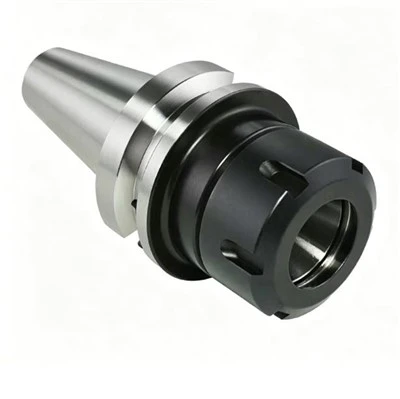

As a supplier of ER Spring Collet Tool Holder BT, I am often asked about the heat resistance of these essential machining tools. In this blog post, I will delve into the factors that determine the heat resistance of an ER Spring Collet Tool Holder BT, its implications for machining operations, and how it compares to other types of tool holders.
Understanding ER Spring Collet Tool Holder BT
Before we discuss heat resistance, let's briefly understand what an ER Spring Collet Tool Holder BT is. The ER spring collet is a type of clamping device used for holding cutting tools in machining applications. The "BT" in the name refers to the standardized tool taper, which is widely used in machining centers in Asia, particularly in Japan. The combination of the ER spring collet and the BT taper provides a secure and precise tool holding solution for a variety of machining operations.
Factors Affecting Heat Resistance
Material Composition
The material used to manufacture the ER Spring Collet Tool Holder BT plays a crucial role in its heat resistance. High - quality tool holders are typically made from alloy steels or other heat - resistant metals. These materials are chosen for their ability to maintain their mechanical properties at elevated temperatures. For example, some tool holders are made from chrome - molybdenum steel, which has good hardness, toughness, and heat resistance. The alloying elements in this steel help to form a stable microstructure that can withstand the thermal stresses generated during machining.


Surface Treatment
Surface treatments such as nitriding or coating can significantly enhance the heat resistance of the tool holder. Nitriding is a process that involves diffusing nitrogen into the surface of the metal, creating a hard, wear - resistant, and heat - resistant layer. This layer can protect the underlying material from the high temperatures generated during cutting and reduce the risk of thermal deformation. Coatings, such as titanium nitride (TiN) or titanium aluminum nitride (TiAlN), can also provide a barrier against heat transfer and improve the tool holder's performance. These coatings have low friction coefficients, which help to reduce the heat generated due to friction between the tool and the holder.
Design and Geometry
The design and geometry of the ER Spring Collet Tool Holder BT can influence its heat resistance. A well - designed tool holder will have features that promote efficient heat dissipation. For example, some tool holders have cooling channels or fins that increase the surface area available for heat transfer. This allows the heat to be dissipated more quickly, preventing the tool holder from reaching excessively high temperatures. Additionally, the geometry of the collet and the taper connection can affect the contact area and the distribution of heat. A proper fit ensures that the heat is evenly distributed, reducing the risk of hot spots and thermal damage.
Implications of Heat Resistance in Machining
Tool Life
One of the most significant implications of heat resistance in an ER Spring Collet Tool Holder BT is its effect on tool life. Excessive heat can cause the cutting tool to wear out more quickly due to thermal softening and oxidation. A tool holder with good heat resistance can help to keep the cutting tool at a lower temperature, reducing wear and extending its lifespan. This not only saves on tool replacement costs but also reduces downtime associated with tool changes.
Machining Accuracy
Heat can also affect the machining accuracy. Thermal expansion of the tool holder and the cutting tool can lead to dimensional inaccuracies in the machined part. A heat - resistant tool holder can minimize thermal expansion, ensuring that the cutting tool maintains its position and orientation accurately throughout the machining process. This results in higher - quality machined parts with tighter tolerances.
Productivity
By reducing tool wear and maintaining machining accuracy, a heat - resistant ER Spring Collet Tool Holder BT can improve productivity. With longer tool life, there are fewer tool changes, which means more continuous machining time. Additionally, the ability to maintain accuracy allows for higher cutting speeds and feeds, further increasing the machining efficiency.
Comparison with Other Tool Holders
SK Shrink Fit Chuck 4.5° Coolant
The SK Shrink Fit Chuck 4.5° Coolant is another type of tool holder known for its high - precision clamping. However, in terms of heat resistance, the ER Spring Collet Tool Holder BT has its advantages. The shrink - fit chuck relies on thermal expansion and contraction for tool clamping, which means it is more sensitive to temperature changes. The ER spring collet, on the other hand, uses a mechanical clamping mechanism, which is generally more stable under variable temperature conditions.
ER Spring Collet Tool Holder GOST
The ER Spring Collet Tool Holder GOST is designed according to the Russian GOST standards. While it shares the same basic principle of using an ER spring collet, the specific heat - resistant properties may vary depending on the manufacturing process and materials used. In general, the BT - type tool holder, with its standardized design and wide acceptance in the global market, often has more consistent heat - resistant performance due to more stringent quality controls.
BT Shrink Fit Chuck 4.5° Coolant
The BT Shrink Fit Chuck 4.5° Coolant combines the BT taper with the shrink - fit clamping method. Similar to the SK shrink - fit chuck, it is more sensitive to temperature fluctuations during the clamping and machining processes. The ER Spring Collet Tool Holder BT offers a more forgiving solution in terms of heat resistance, as it does not rely on thermal expansion and contraction for holding the tool.
ER Spring Collet Tool Holder CAT
The ER Spring Collet Tool Holder CAT is designed for use with CAT - type tool tapers, which are commonly used in North America. While both the CAT and BT tool holders use ER spring collets, the BT - type may have different heat - resistant characteristics depending on the specific applications and manufacturing standards. In some cases, the BT - type tool holder may be better suited for high - speed machining operations where heat management is critical.
Conclusion
In conclusion, the heat resistance of an ER Spring Collet Tool Holder BT is determined by a combination of factors, including material composition, surface treatment, and design. Its heat - resistant properties have significant implications for tool life, machining accuracy, and productivity. When compared to other types of tool holders such as shrink - fit chucks and other collet tool holders with different tapers, the ER Spring Collet Tool Holder BT offers a balance of heat resistance, stability, and versatility.
If you are in the market for high - quality ER Spring Collet Tool Holders BT or have any questions about their heat resistance and applications, I encourage you to get in touch. We can discuss your specific machining needs and how our products can meet them. Whether you are looking to improve tool life, increase machining accuracy, or enhance productivity, our ER Spring Collet Tool Holder BT can be a reliable solution.
References
- "Tool Holder Handbook" by a leading machining tool manufacturer.
- Technical papers on tool holder materials and heat treatment from industry research institutions.
- Comparative studies on different types of tool holders in machining applications.