
What is the cutting depth for a Thread Turning Insert?
As a supplier of Thread Turning Inserts, I am often asked about the appropriate cutting depth for these inserts. The cutting depth is a crucial parameter in thread turning operations, as it directly affects the quality of the threads, the tool life, and the overall efficiency of the machining process. In this blog post, I will delve into the factors that influence the cutting depth for a Thread Turning Insert and provide some guidelines to help you make the right choice.
Understanding Thread Turning Inserts
Before we discuss the cutting depth, let's first understand what a Thread Turning Insert is. Thread Turning Inserts are precision cutting tools used in lathes to create threads on workpieces. They are made of high - performance materials such as carbide, which can withstand high cutting forces and temperatures. These inserts come in various shapes and sizes, designed to produce different types of threads, including metric, imperial, and special - form threads.
You can find a wide range of Thread Turning Insert options on our website, which are engineered to meet the diverse needs of the machining industry.
Factors Affecting Cutting Depth
1. Material of the Workpiece
The material of the workpiece is one of the most significant factors influencing the cutting depth. Different materials have different mechanical properties, such as hardness, toughness, and machinability. For example, soft materials like aluminum can generally tolerate a larger cutting depth compared to hard materials like stainless steel or titanium. When machining soft materials, a larger cutting depth can be used to increase the material removal rate and reduce the machining time. However, for hard materials, a smaller cutting depth is usually recommended to avoid excessive tool wear and breakage.
2. Thread Profile
The thread profile also plays a crucial role in determining the cutting depth. Different thread profiles, such as V - threads, square threads, and trapezoidal threads, have different geometries and requirements. For instance, a V - thread has a relatively sharp profile, and the cutting depth needs to be carefully controlled to ensure the correct thread form. In contrast, a square thread may allow for a slightly larger cutting depth due to its more straightforward geometry.
3. Insert Geometry
The geometry of the Thread Turning Insert itself affects the cutting depth. Inserts with different rake angles, clearance angles, and cutting edge geometries will perform differently under various cutting conditions. A positive rake angle insert can reduce the cutting force, allowing for a larger cutting depth in some cases. However, it may also reduce the strength of the cutting edge. On the other hand, a negative rake angle insert has a stronger cutting edge but may require a smaller cutting depth.
4. Machine Tool Capability
The capabilities of the machine tool, such as the power, rigidity, and spindle speed, also limit the cutting depth. A machine with high power and good rigidity can handle larger cutting depths without excessive vibration or deflection. In contrast, a less powerful or less rigid machine may require a smaller cutting depth to maintain stable machining.
Guidelines for Selecting Cutting Depth
1. Start with Small Depths
When starting a new thread turning operation, it is always advisable to start with a small cutting depth. This allows you to test the cutting conditions, such as the chip formation and the surface finish of the threads. If the cutting process is stable and the quality of the threads is satisfactory, you can gradually increase the cutting depth in small increments.
2. Refer to Manufacturer's Recommendations
Most Thread Turning Insert manufacturers provide guidelines on the recommended cutting depths for their products. These recommendations are based on extensive testing and research and take into account the insert geometry, the material of the insert, and the typical machining conditions. It is essential to follow these recommendations to ensure optimal performance and tool life.
3. Consider the Thread Tolerance
The required thread tolerance also affects the cutting depth. If a high - precision thread is required, a smaller cutting depth may be necessary to achieve the desired accuracy. This is because a smaller cutting depth can reduce the cutting forces and the potential for dimensional errors.
Impact of Cutting Depth on Machining
1. Tool Life
The cutting depth has a significant impact on the tool life of the Thread Turning Insert. A larger cutting depth generally increases the cutting forces and the temperature at the cutting edge, which can lead to faster tool wear. On the other hand, a very small cutting depth may result in excessive rubbing between the insert and the workpiece, also causing premature tool wear. Therefore, finding the optimal cutting depth is crucial for maximizing the tool life.
2. Surface Finish
The cutting depth also affects the surface finish of the threads. A larger cutting depth may result in a rougher surface finish due to the increased cutting forces and the potential for chip breakage. A smaller cutting depth, on the other hand, can produce a smoother surface finish, but it may also increase the machining time.
3. Material Removal Rate
The cutting depth is directly related to the material removal rate. A larger cutting depth allows for more material to be removed in each pass, which can significantly reduce the machining time. However, as mentioned earlier, the cutting depth needs to be balanced with other factors such as tool life and surface finish.
Other Related Inserts
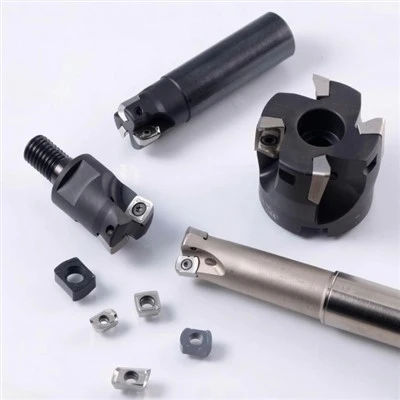
In addition to Thread Turning Inserts, we also offer a variety of other cutting inserts, such as CNC Turning Insert, Indexable Milling Insert, and Carbide Turning Inserts. These inserts are designed to meet different machining requirements and can be used in conjunction with Thread Turning Inserts to achieve more comprehensive machining solutions.


Conclusion
Selecting the appropriate cutting depth for a Thread Turning Insert is a complex process that requires careful consideration of multiple factors, including the material of the workpiece, the thread profile, the insert geometry, and the machine tool capability. By following the guidelines provided in this blog post and referring to the manufacturer's recommendations, you can optimize the cutting depth to achieve high - quality threads, long tool life, and efficient machining.
If you are interested in purchasing Thread Turning Inserts or have any questions about cutting depth or other machining parameters, please feel free to contact us for further discussion and procurement. We are committed to providing you with the best products and technical support to meet your machining needs.
References
- "Machining Handbook" by Industrial Press Inc.
- Technical literature from Thread Turning Insert manufacturers.