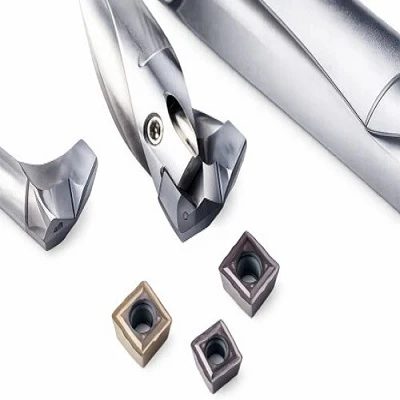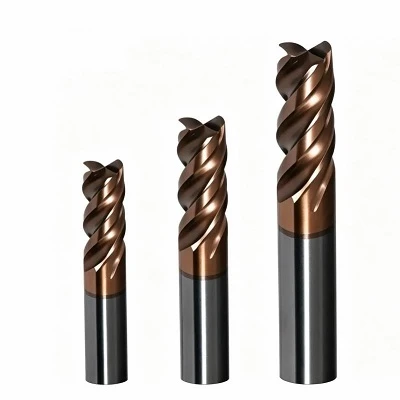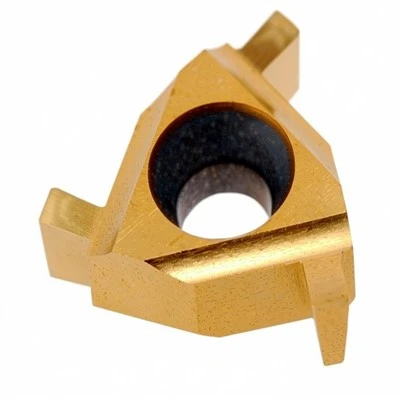

Indexable high-feed milling cutters are engineered for rapid metal removal during roughing operations in mold making, die manufacturing, and structural component production. The specialized cutting geometry combines a shallow entering angle with high feed per tooth, distributing cutting forces efficiently and elevating material removal rates in cavity roughing, pocket milling, and contour machining. Proper matching of cutter diameter, insert geometry, and tool configuration establishes stability prior to semi-finishing.
Key Advantages
High Material Removal Rate: Optimized cutting geometry supports high feed per tooth, maximizing productivity when axial and radial engagement match the machining setup.
Flexible Insert Indexing: Indexable inserts allow cutting edges to be renewed quickly without replacing the main cutter body, reducing tooling overhead.
Versatile Roughing Operations: Configurations accommodate pocket milling, cavity roughing, face milling, and shallow ramping operations across various structural components.
Adaptable Tooling Design: Cutter diameter, overall length, mounting interface, and insert layout can be tailored to specific machine environments and clearance requirements.
Product Specifications
|
Parameter |
Specification |
|
Product Type |
Indexable High-Feed Milling Cutter |
|
Cutter Diameter Range |
25 mm to 160 mm |
|
Maximum Axial Depth of Cut |
0.5 mm to 2.5 mm |
|
Number of Effective Teeth |
2 to 10 teeth (Model dependent) |
|
Insert Type and Size |
Square, round, or proprietary high-feed inserts |
|
Mounting Interface |
Arbor mount, cylindrical shank, or modular connection |
|
Cutter Body Material |
High-strength alloy steel with thermal treatment |
|
Workpiece Material Range |
Carbon steel, alloy steel, tool steel, stainless steel, cast iron |
|
Coolant Delivery |
Internal through-coolant or external delivery options |
Applications
Mold and Die Cavities: Efficiently clear bulk material from deep pockets, complex internal contours, and three-dimensional mold cavities prior to finishing.
Precision Component Machining: Rough-machine structural steel and alloy workpieces where high feed rates reduce overall cycle time.
Pocket and Slot Milling: Access restricted internal pockets using specialized cutter projections and optimized body diameters.
General Industrial Production: Apply high-feed milling strategies across demanding metalcutting environments with adequate machine rigidity.
Cutter Selection Guide
Cutter Diameter Selection: Choose a diameter that covers the required surface area while maintaining safe clearance inside internal pockets and corners.
Insert Geometry Matching: Select insert grade, chip breaker, and corner radius based on workpiece hardness, material composition, and roughing depth.
Tooth Count Optimization: Balance effective tooth density with available spindle power, chip evacuation space, and maximum feed capability.
Tool Overhang Minimization: Utilize the shortest possible tool projection to maximize rigidity, minimize deflection, and maintain process stability.
Insert Compatibility and Cutting Setup
Insert Seating Verification: Ensure correct insert designation, precise seating pocket alignment, and recommended tightening torque for secure retention.
Cutting Parameter Guidelines: Program cutting speed, feed per tooth, and radial depth according to material specifications and machine dynamic stability.
Chip Evacuation Management: Monitor chip formation in deep cavities, adjusting coolant pressure and toolpath strategy to prevent chip re-cutting.
Customization Options
Dimensional Adaptation: Tailor cutter diameter, overall body length, functional reach, and shank dimensions to meet restricted clearance requirements.
Specialized Application Setup: Configure insert pocket angles, tooth pitches, and specialized coatings for dedicated material machining.
Technical Project Review: Submit component drawings, material specifications, and machine interfaces for comprehensive engineering evaluation.
Manufacturing and Quality Control
Dimensional Inspection: Verify critical body tolerances, mounting interfaces, and insert seat accuracy using precision metrology equipment.
Assembly Validation: Test insert pocket fit, clamping screw integrity, and runout tolerances prior to tool dispatch.
Technical Documentation: Access detailed dimensional drawings, spare parts lists, and recommended operating parameters for each tool model.
Ordering Information
Specify the required cutter model, diameter, mounting type, insert designation, workpiece material, and expected quantity when requesting a quotation. Include existing component drawings or tool numbers when replacing established machining configurations to ensure precise matching.
Frequently Asked Questions
Q: What machining operations suit high-feed milling cutters?
A: They are primarily designed for rapid stock removal in mold cavity roughing, pocket milling, face milling, and shallow ramping operations.
Q: Can cutter body dimensions be customized?
A: Yes, custom diameters, reach lengths, and mounting interfaces can be engineered for specific component geometries and restricted spaces.
Q: How should replacement inserts be selected?
A: Select inserts matching the exact cutter model designation, insert geometry, and workpiece material hardness to ensure proper seating and performance.
Q: Are cutting parameters universal across different materials?
A: No, cutting speeds, feed rates, and depth limits must be adjusted based on workpiece hardness, material alloy composition, and machine rigidity.
Q: What details are required to request a quotation?
A: Provide the target cutter diameter, mounting interface, workpiece material, estimated order quantity, and relevant component drawings if customization is needed.
Hot Tags: indexable high-feed milling cutters for roughing, China indexable high-feed milling cutters for roughing manufacturers, suppliers, factory, carbide end mill for aluminum, carbide end mills, CNC High Feed End Mills, CNC Roughing End Mill, SH260 H end mills, slotting cutter